Similar to last year, in 2025 I read books whenever spare moments allowed. Unlike last year, where most of my reading was digital, I read more real paper books (all part of my “live more analog” life goals), listened to more books on audio, and peppered in e-reads along the way.
When I wasn’t listening to or reading them, I subscribed to podcasts that critiqued books. These activities brought pleasure and grounding to my year.
Overall, I read 120 books in 2025 – 76 fiction titles and 44 nonfiction. I have Traci Thomas of The Stacks podcast to thank for broadening my nonfiction lens. Her bookcentric podcast consistently delivers honest critique and it’s been so enriching to become a more well-read nonfiction reader.
As I look at my standout 2025 titles, I’d summarize the themes I gravitated to this year as follows:
- growth,
- reckoning with the present and the past, and
- confronting the myths we tell ourselves about our existence (be they capitalism, family unity, or whatever else).
Book Challenges
To broaden my reading experiences, I took on the Politics & Prose Reading Challenge, which gave readers 52 prompts to complete throughout the year. Prompts included books like: a classic you should have read in high school, a sci-fi book, an audiobook, a title over 400 pages, and more.
I liked ticking off a book challenge, but learned that a book challenge needs to be balanced with other titles on my reading list. Otherwise, I get overwhelmed by my reading ambitions, lose focus, and end up in reading paralysis mode.
Buddy Reads!
Because of the P&P Challenge, I embarked on my first buddy read, The Last Samurai by Helent DeWitt, first published in 2000. Good thing it was a buddy read or I would not have finished it! Parts of The Last Samurai delighted me, such as the dry wit, ideas around language, and the exploration of ways society and institutions place arbitrary limits on individual potential and creativity.
Other parts were a chore to read, and Ludo’s quest was too much for me. Wrap it up, Ludo, I wanted to yell. But this book is unique and DeWitt presents a lot of rich themes that are ripe for a buddy read and discussion.
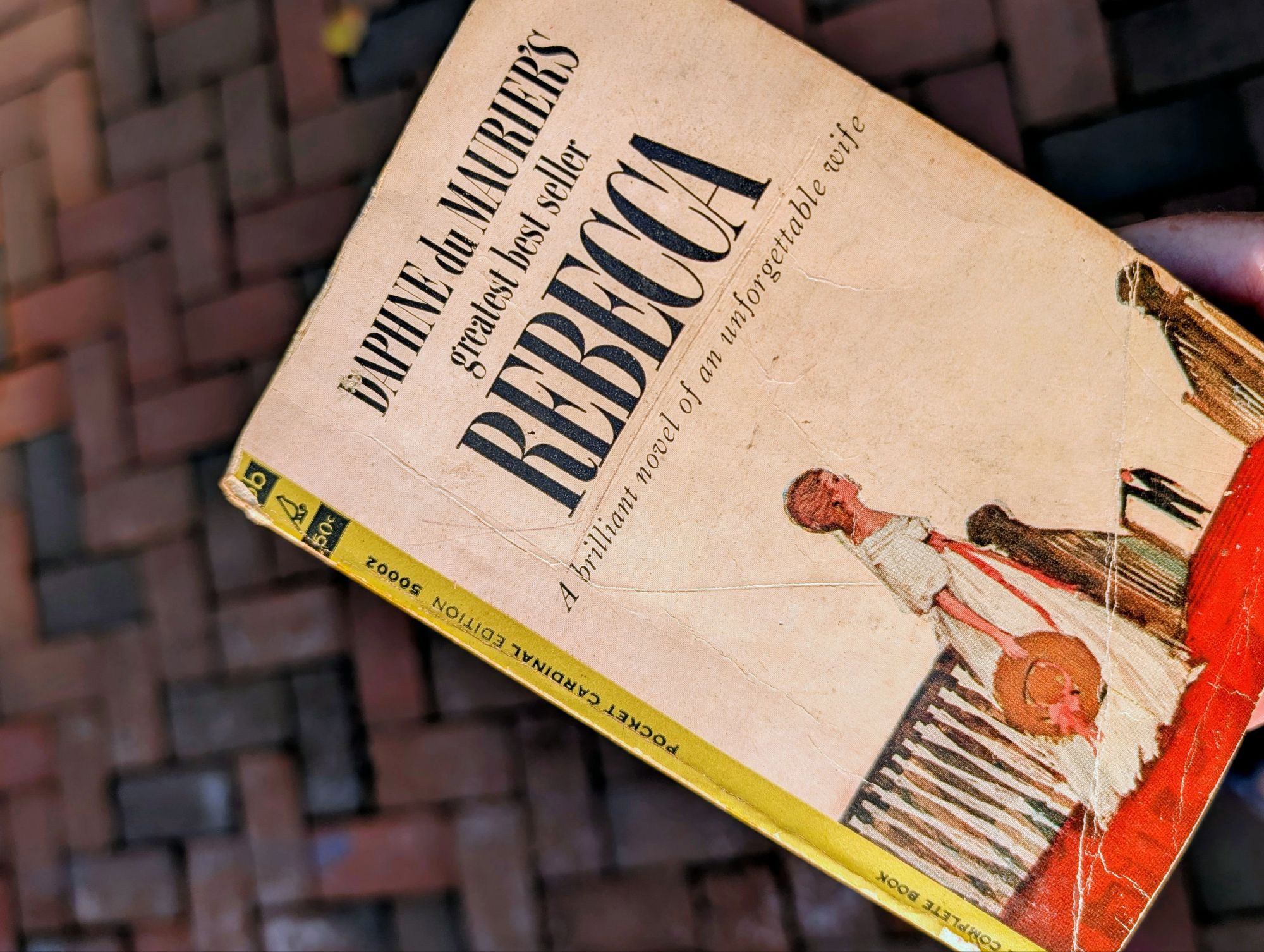
Embracing Classics and Horror
I also began listening to the Secret Life of Books(SLoB) podcast, which dives spiritedly into classic literature. This pod has helped me rethink classic literature and how it reverberates in our stories today – another great pod for the book lover in your life.
Largely because of SLoB, I delved into horror this year, taking on Turn of the Screw (1898) by Henry James, Frankenstein (1818 version) by Mary Shelley, and The Haunting of Hill House (1959) by Shirley Jackson (a re-read for me).
I paired these reads with The Haunting of Alma Fielding by Kate Summerscale, a nonfiction exploration of hauntings and poltergeists, psychical research and Freudian theory amidst the run-up to World War II. This text provided expanded context to Shirley Jackson’s work in particular.
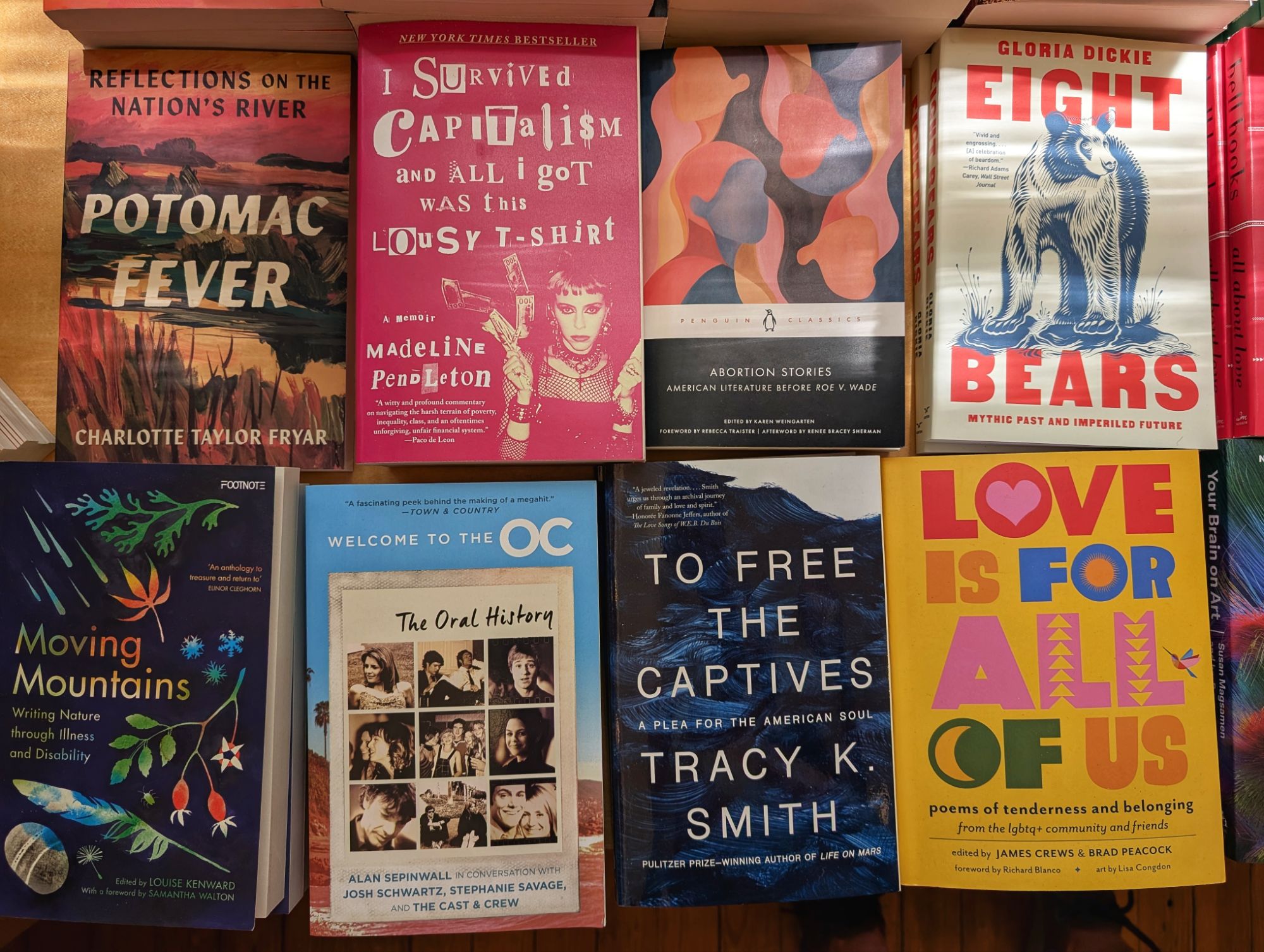
The Memoir Rabbit Hole
I tumbled down a memoir rabbit hole, reading 15 in total. I enjoyed exploring this genre until my consumption of it became like eating too much candy! I had a memoir stomach ache. I’ll probably read a few in 2026, but I’m pretty sated on memoir for the moment.
Here are three standouts:
- Notes from a Young Black Chef, by Kwame Onwuachi. (2019) Onwuachi is intense about food, its flavor, the memories and experiences that food holds, and I was here for it. I’m not a foodie but don’t think you need to be to appreciate his story.In addition, Onwuachi frames his memoir around a business failure – Shaw Bijou for the D.C. locals – and each chapter concludes with a recipe. This framing around failure was a bold move, and that as well as the D.C. connection (I remember so much criticism of Shaw Bijou before it closed!) added to my enjoyment of this unexpected treat of a memoir.
- Careless People, by Sara Wynn-Williams. (2025) A tell-all that names names and explores the growth of Facebook as an international platform with a lack of care about the influence it wields on political processes as long as Facebook makes money for its shareholders and those at the top. Careless People is somewhat salacious, though it does not contain many new reveals about the company, and I did not buy Wynn-Williams’ presence in this book as an innocent bystander. It’s rip of a read, and if you need inspiration to take a social media break this will deliver it.
- Papillon, by Henri Charriere. (1969) I read this so you didn’t have to! You’re welcome! This 1969 memoir about a former French penal colony prisoner who went by the nickname Papillon is likely about half true (at most!), but it was worth experiencing as a timepiece adventure story. It’s so problematic, especially by today’s standards – racist, sexist, and homophobic, and it would also never pass a fact check. Still, it has good reflections about the inhumane French justice system and the penal colonies of the time.

My Top Books of 2025 (in no specific order)
- We Do Not Part, by Han Kang. (2025) A visceral yet surreal story that shows how history reverberates in our countries and our bodies. We must reckon with the horrors of the past.
- Empire of Pain, by Patrick Radden Keefe. (2022) The Sacklers are as bad as you think, possibly worse! An incredibly well-researched and precisely told story of the Sackler family and how we got here with 1. oxycontin and 2. the Sackler name and its connection to the art world. This will make you weep with fury and grief.
- Remember Us, by Jacqueline Woodson. (2025) I read this via audiobook, narrated by the author. Remember Us encapsulates the pure friendship of youth, and what it is to grow from kid to adolescent. It also takes place in an area of New York that used to be known as the Matchbox because of all the devastating house fires that occurred there, a period I knew nothing about until reading Woodson’s book.
- The Great Gatsby, by F. Scott Fitzgerald. (1925, happy 100th, Gatsby!) The American dream is just that. Daisy’s voice will always sound like money and you’re always from where you’re from no matter how much you want to outrun it. Make true connections or people will just go to your parties and no one will come to your funeral! Made me want to move back to the Midwest in so many ways, but nostalgia is its own kind of dream. And here’s a link to an explanation of the iconic book cover (who knew?!).
- Fire Exit, by Morgan Talty. (2024) A tightly told forthright story about family, relationships, blood and beyond-blood connections, as well tribal identity and complexities. Takes place near the Penobscot reservation in Maine. Fire Exit engrossed me, it’s a great winter read, and I have it on my re-read list. Talty writes the ending that’s true to the story, and not the one we might wish for.
- The River Has Roots, by Amal El-Matar. (2025) A surreal fairy tale that absorbed me with music and song. Grammar is everything, and the bond between sisters is a superpower.
- Wild Girls, by Tiya Miles. (2024) The wilderness is not to be feared! Miles shows how the natural world shaped and influenced women in history. I loved it. Pairs well with Miles’ book Night Flyer (2025), about Harriet Tubman’s life and relationship to the earth, which I also enjoyed.
- The Haunting of Hill House, by Shirley Jackson. (1959) Who haunts who? This re-read shows the power of Shirley Jackson’s prose. This story is alive! You can read it multiple ways and the twisted quotidian details of Hill House and its surrounds make the story.
- By the Fire We Carry: The Generations-Long Fight for Justice on Native Land, by Rebecca Nagle. (2025) An extensively researched history of the Cherokee Nation told through two recent Supreme Court cases about reservation land and jurisdictions. Nagle distills complicated legal matters into layperson’s reading. One thing remains constant: our country has never lived up to its ideals.
- Stone Yard Devotional, by Charlotte Wood. (2024) This book was divisive, but sorry haters, it captivated me! A meditation on acceptance, forgiveness, kindness, death, and ways the present intersects with the pst. Also, you cannot escape the larger world, no matter how receded from it you think you are. The mice will find you!
- A Manual for Cleaning Women, by Lucia Berlin. (2015) Straightforward short stories of flawed people built on fine details that often ended with a kicker. This book made me laugh and broke my heart a few times. Everyone has a story to tell, and you should read these!
- Beautyland, by Marie-Helene Bertino. (2024) A sci-fi-light story of an alien in Philly who communicates with her home planet via fax machine and shares what it is to grow up and be a person in the world, and what it means to belong.
The Full List of 120 (shown in Storygraph graphics!)
Are you part of Storygraph? I recommend it! Find me there as @coffeeneur (and I’m also on Goodreads here). Here is the graphic rundown – by month – of the 120 books I read in 2025.
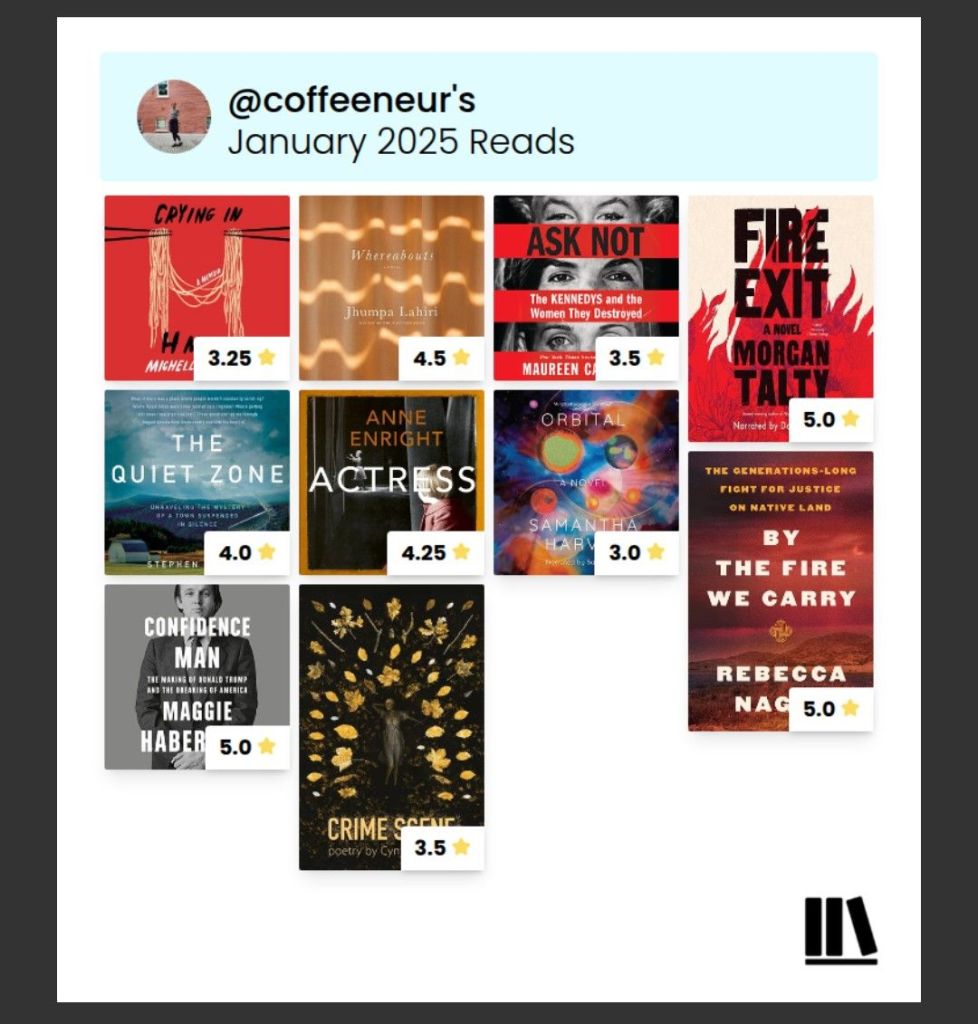
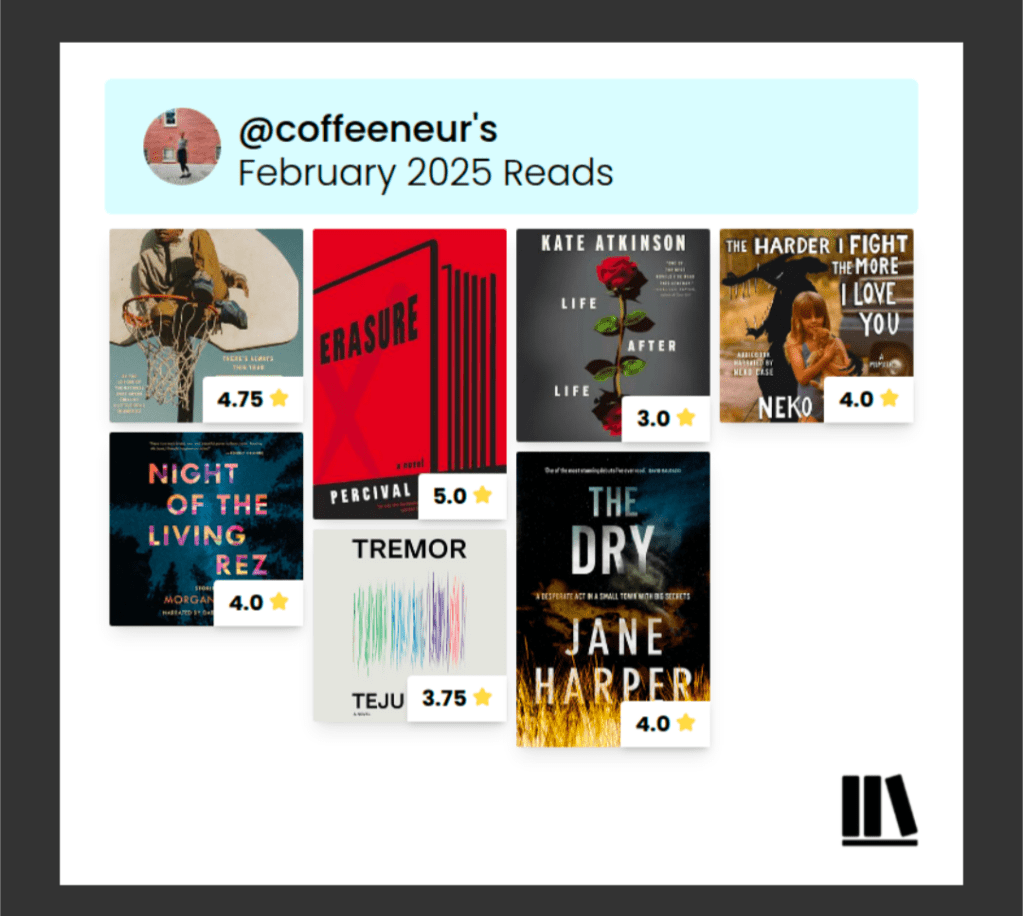

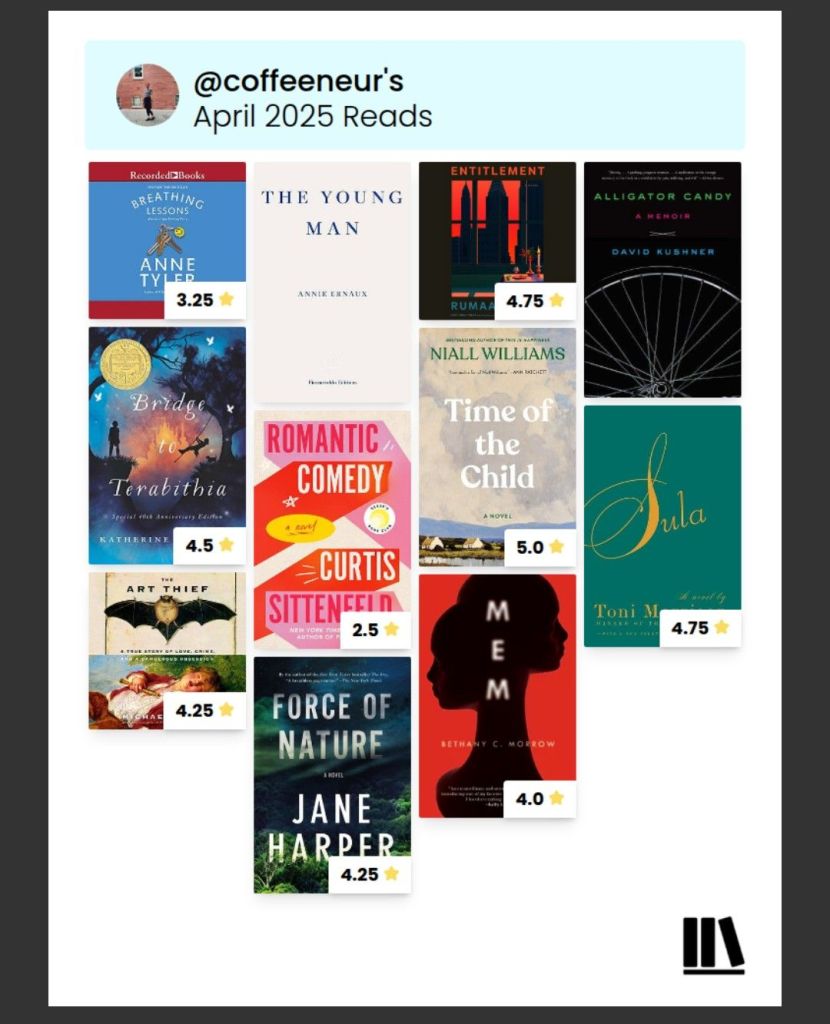
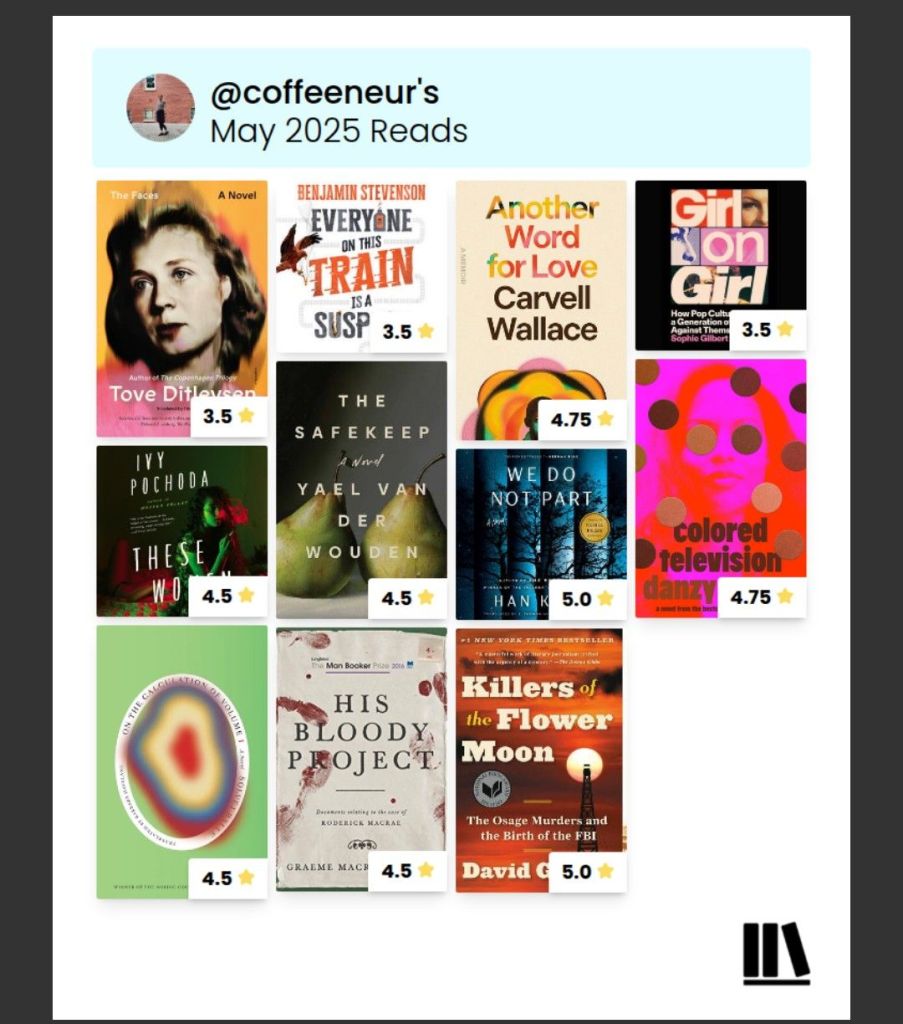
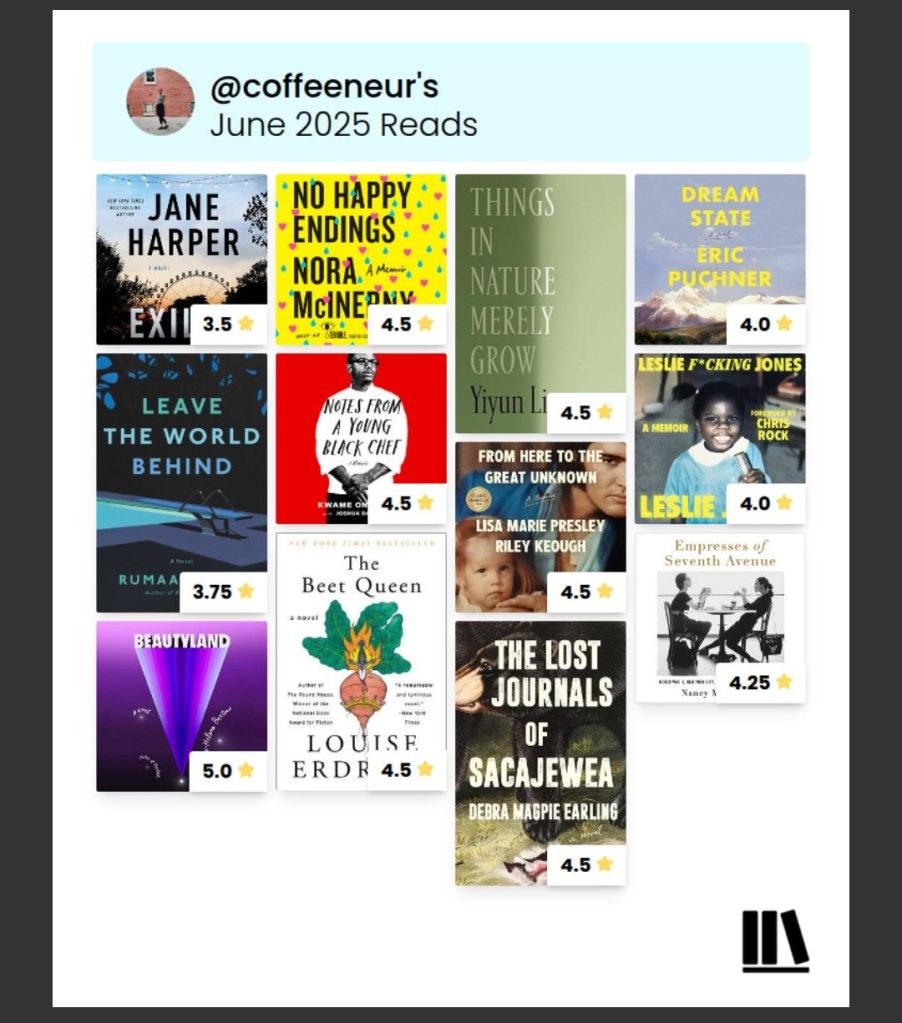
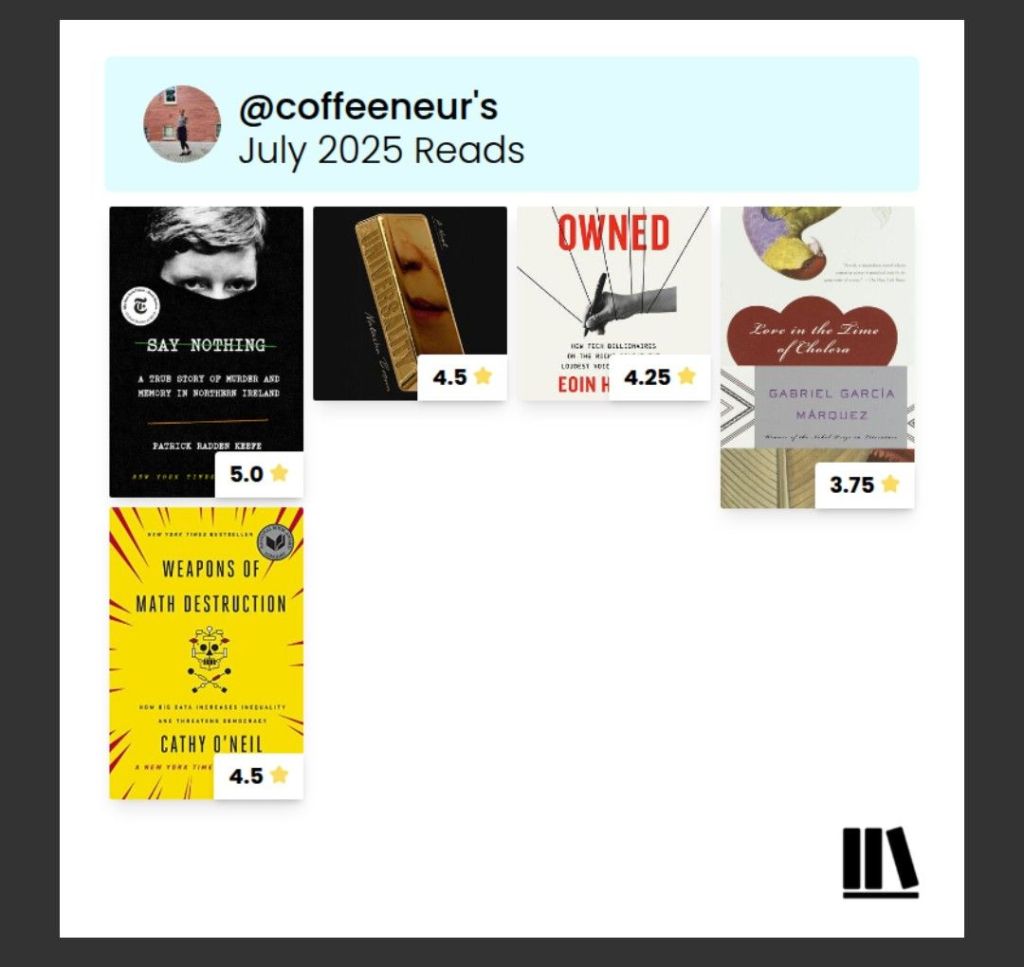
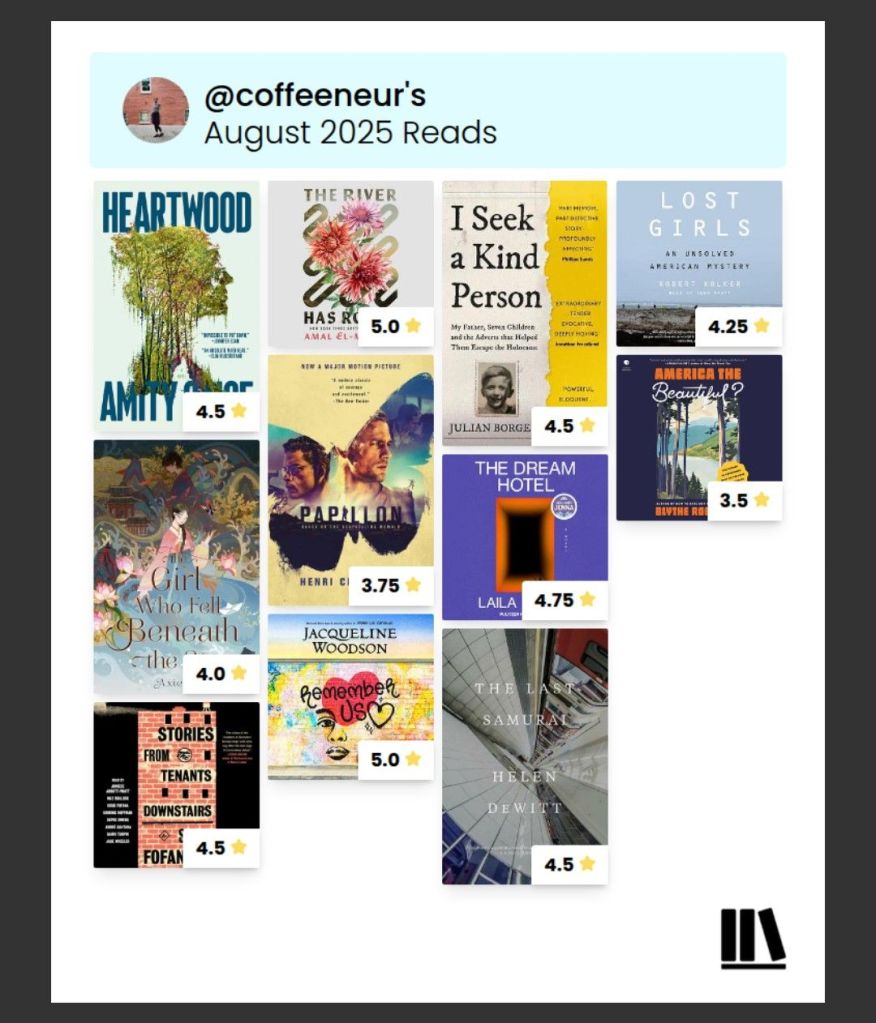
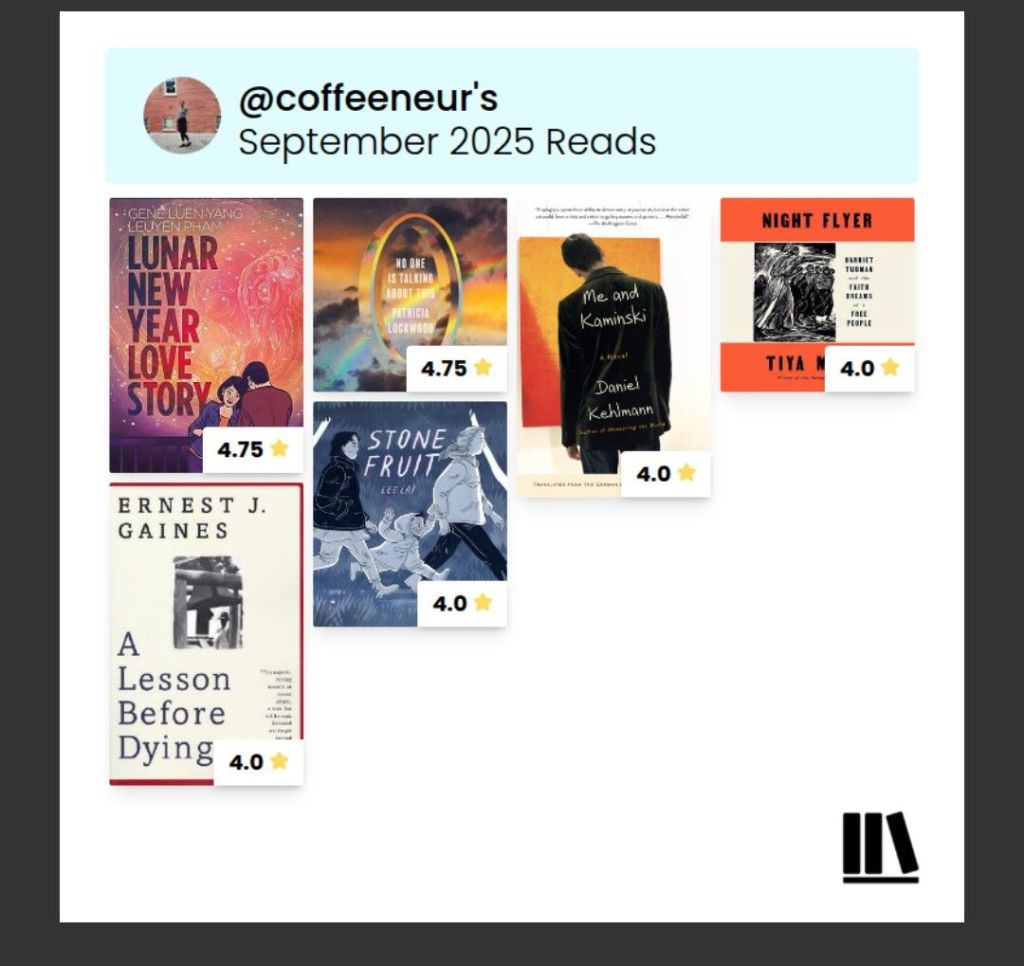
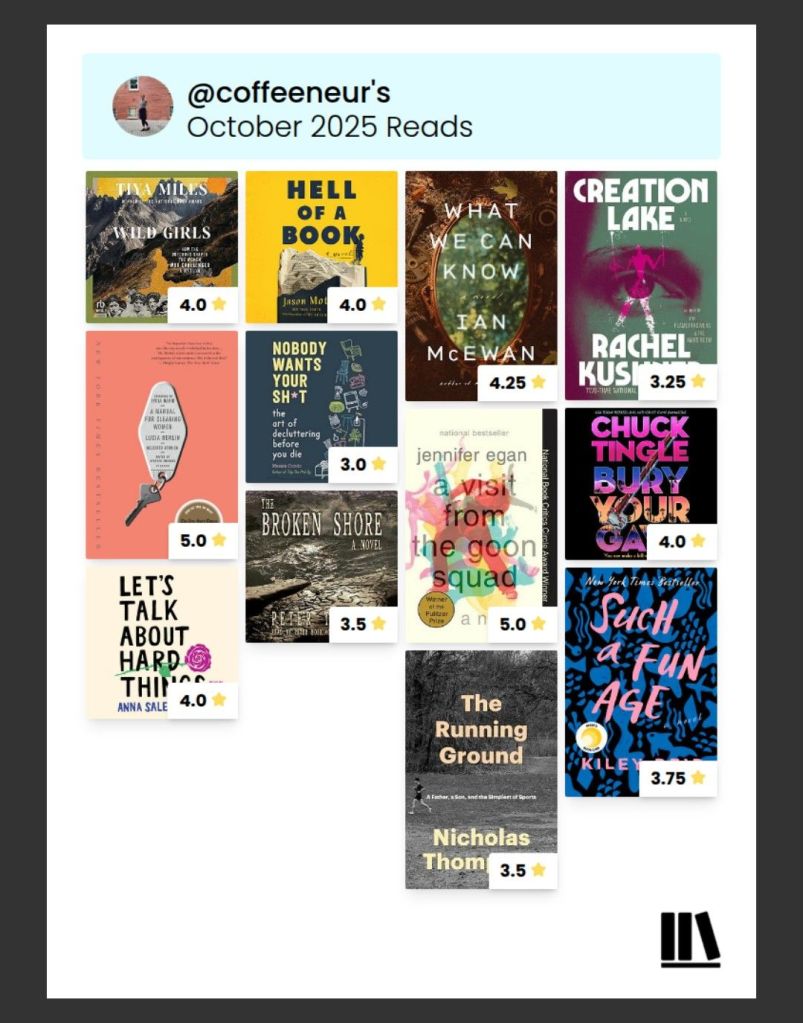
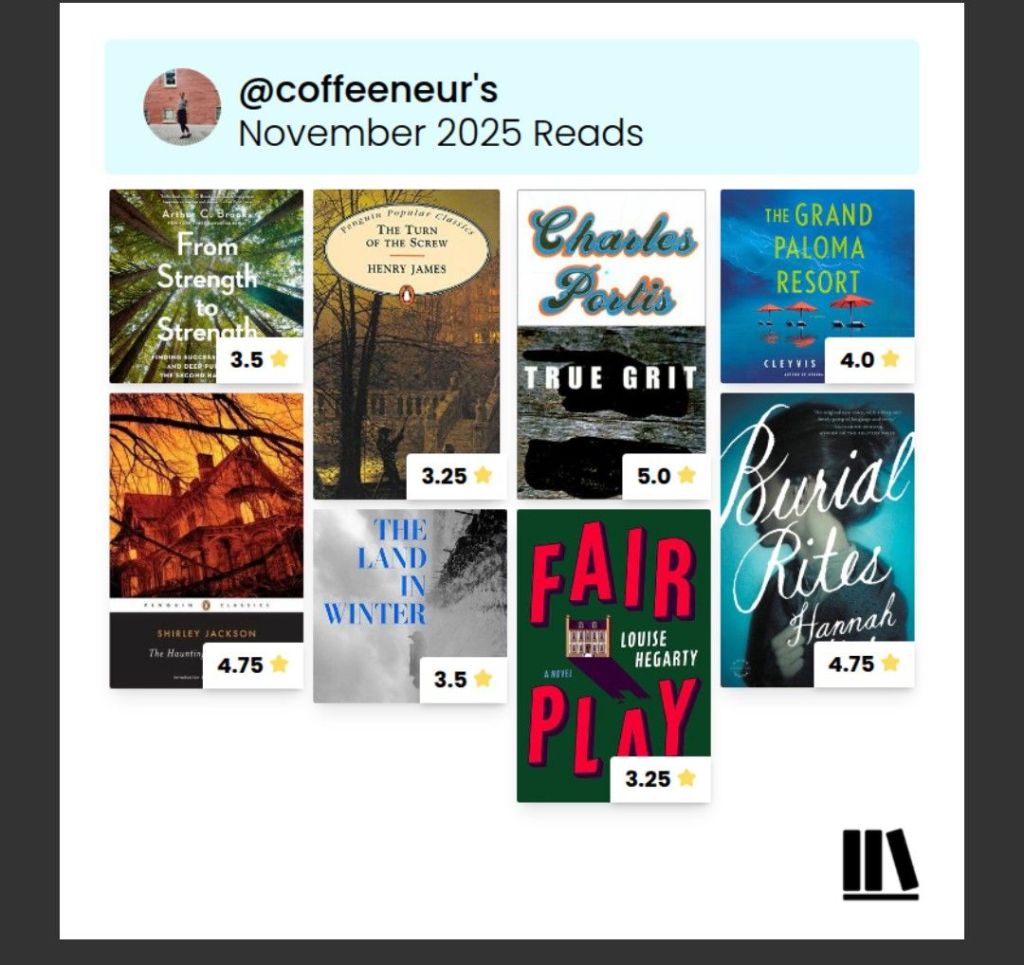
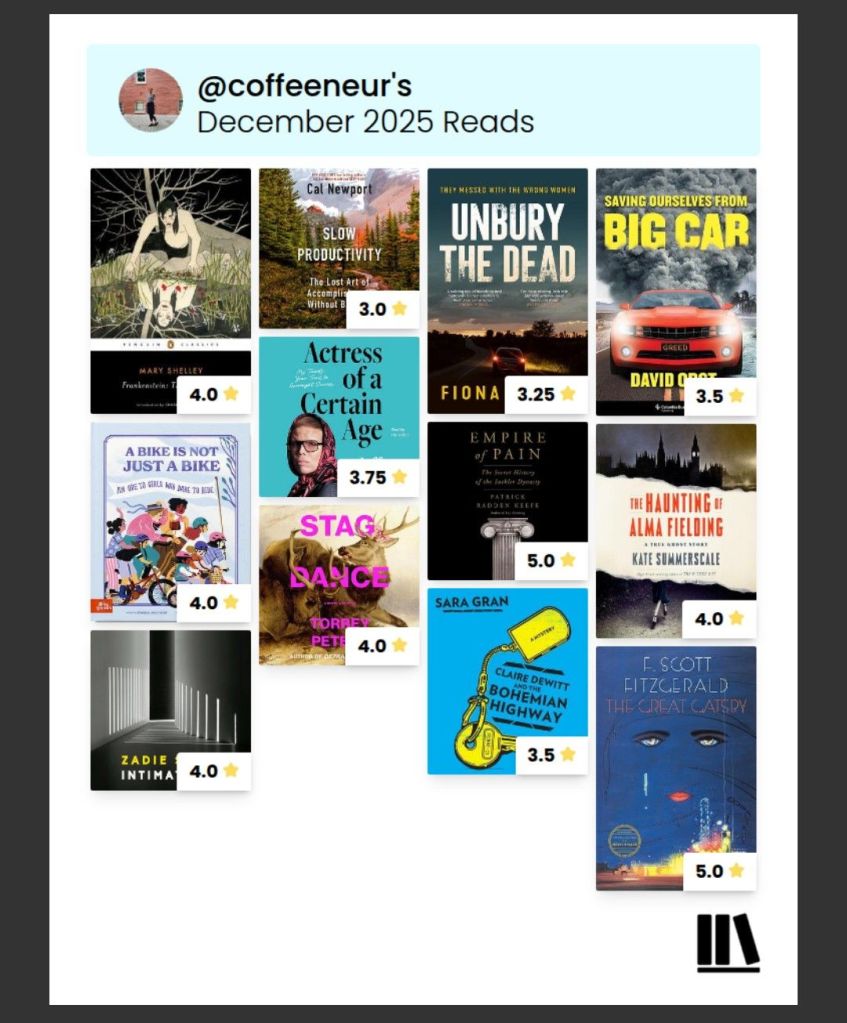
As you’ll note, I assigned ratings to each book, but those are mostly for me to provide a general reaction (favorable or negative) to it. I’m not that precise with my ratings and some books I rated high still didn’t reach my top reads of the year, just because. It’s not scientific!

Did we have any crossover this year? Let me know!
I hope you also had the year in reading that you wished for and, as always, send me your recs!


 Chasing Mailboxes