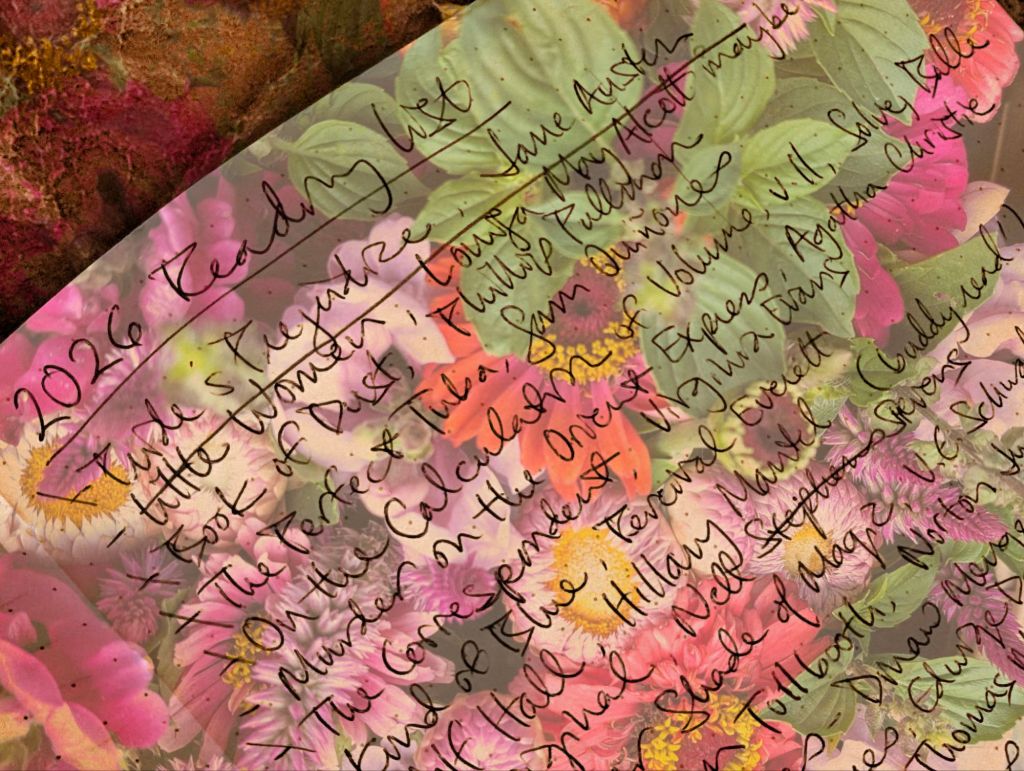
I started a new-to-me approach to books for 2026. Unlike last year, where I flitted like a butterfly from title to title without a real reading plan, for this year I put together a To Be Read (TBR) list that also allowed room to flap my wings over to an unplanned title here and there.
In January I read seven books, four of them off the TBR. I was glad to have a little more structure, and I’ll carry this approach into February.
I also love checking things off of lists. Mission accomplished, a little checkmark says to me. However, I also learned that if a book isn’t working, it might be okay to stop reading that book and scratch it off the old TBR before losing hours of your life that you’ll never get back!
With that preamble, I give you January in reading.
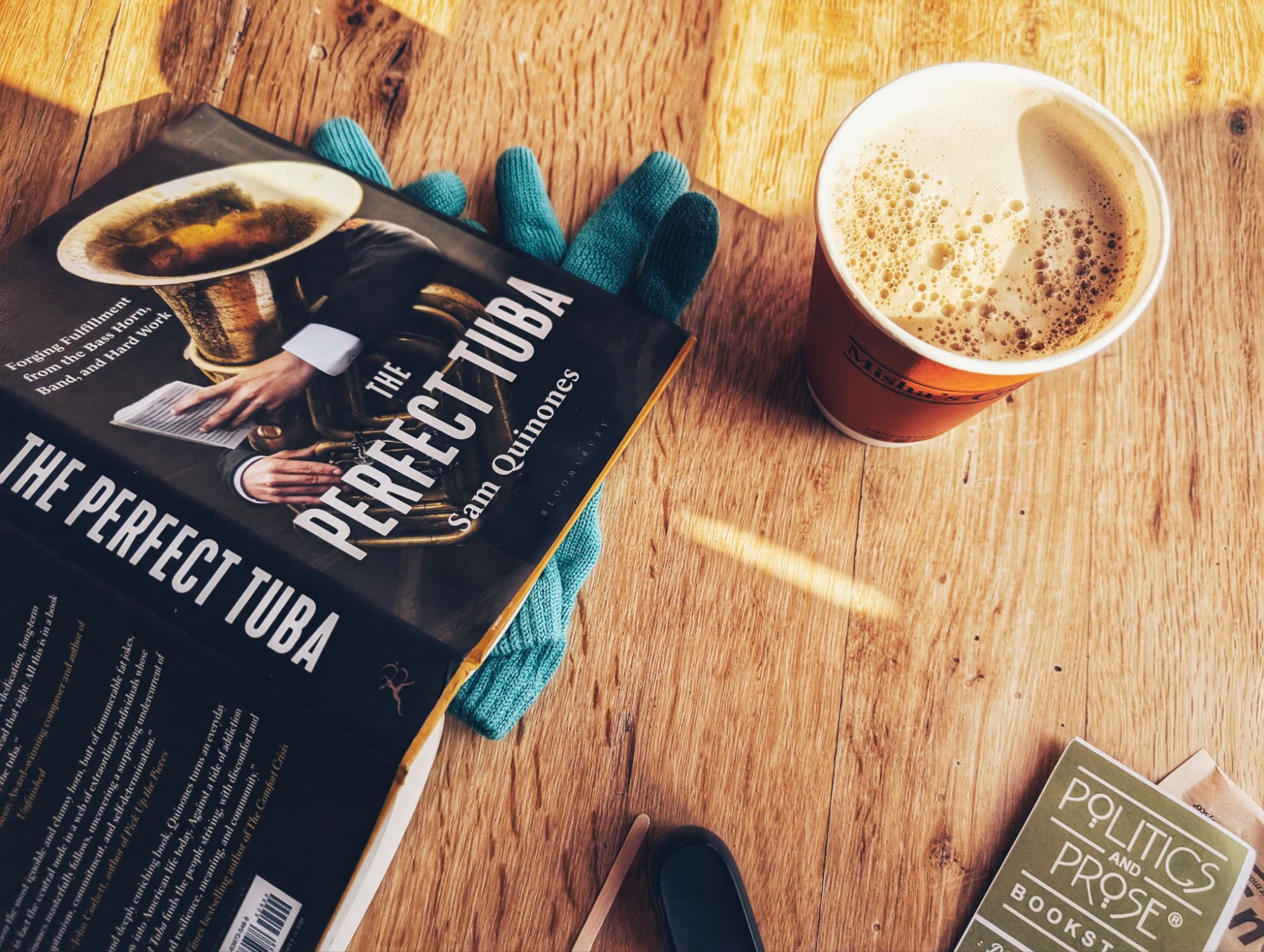
The Perfect Tuba, by Sam Quinones
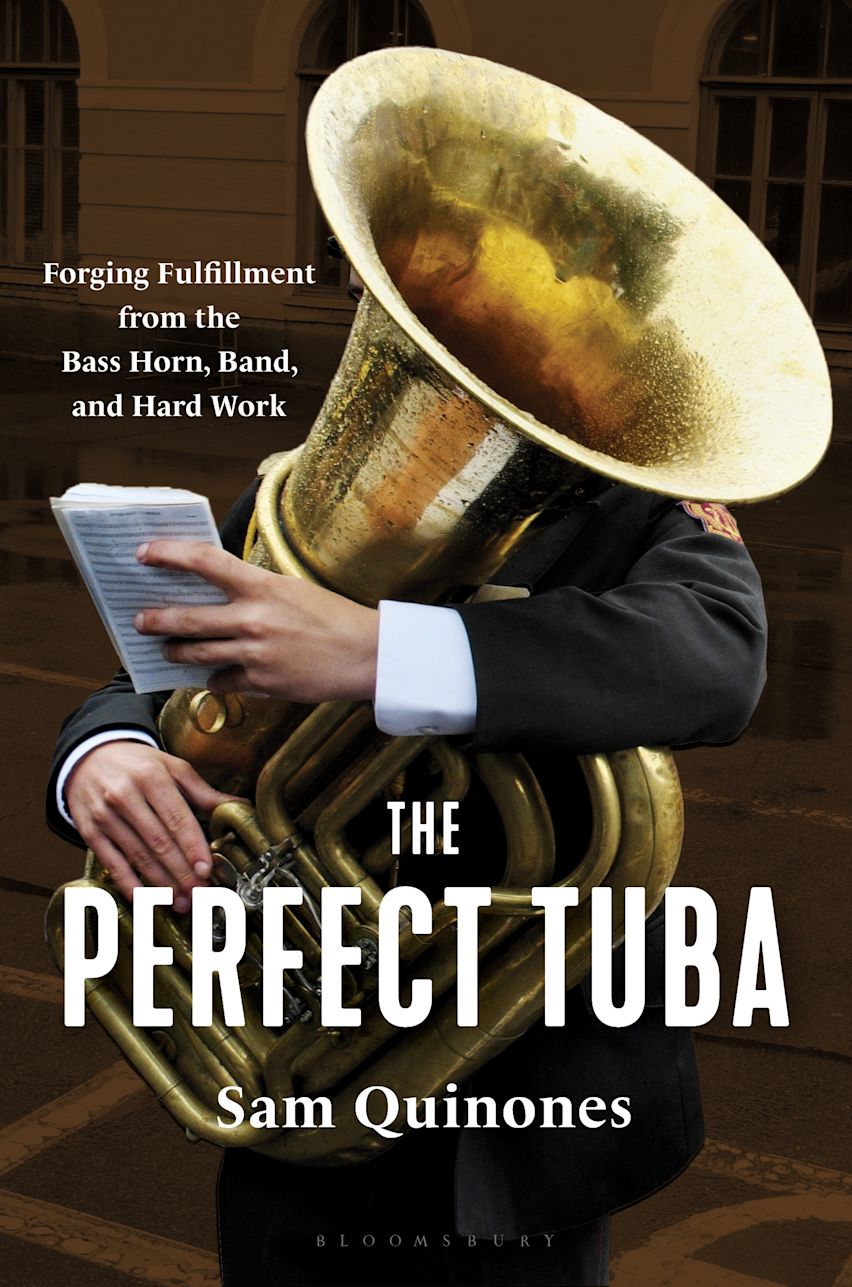
Quinones writes a history and an homage to the tuba and it was so much fun to read about. This book is a song to the people so taken by the instrument that it became central to their existence as both instrument and craft – for a period of time or for a lifetime.
The book connects us to the areas and the people heavily influenced by the instrument. Quinones shows that our society does not value the arts to the point where most people can make a living through music, though times exist where it was more possible. Who knew?!
The Perfect Tuba is at its best when describing the York tubas, their unique sound and the zealous quest to recreate it, as well as the rise of the tuba players and bands (and band teachers) in Texas. Quinones does an excellent job of walking us through the growing wave of bands’ and in turn their communities’ commitment to excellence despite challenges of race, class, and geography. It was really good stuff that took me back to my own connections to music, an instrument, and favorite band teachers who believed in our potential.
The Perfect Tuba reminded me of that fleeting, singular feeling when a band’s players merge into one sound. That is magic. Cheers to the band teachers everywhere who lift us up and to those who play for the love of it.
On the Calculation of Volume, Volume II, by Solvej Balle, translated by Barbara J. Haveland

Delicious! This book engrossed me in a way Volume I did not. The migrating season machine and Rome! The ways we float over the world but yet are containers that leave tangible traces. I’m here to explore these ideas with Balle and her characters!
Balle enchants me with her invented concept of being stuck in the 18th of November, even though it falters in its construction at times. In particular, the separation from her husband and loved ones is hard for me to reconcile. Even so, I’m all in on this story.
On the Calculation of Volume ultimately maintains an inward focus throughout, as was the case in the first book. The way Balle distills down to the individual and explores what it means to be a person outside of time and yet with a hyperfocus on what one contains, produces, and leaves in the world every day is so clever. Volume III is on my holds list at the library and I hope to read it soon.
Isaac’s Song, by Daniel Black
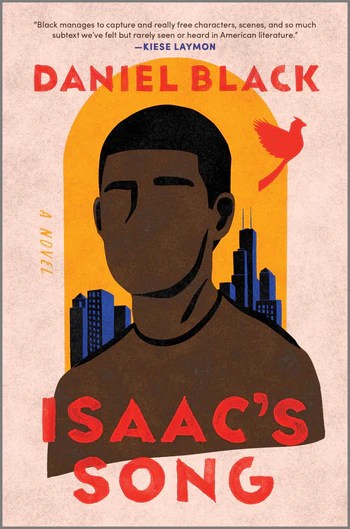
Veering off of my TBR, I read this book after listening to an interview snippet with the author on the Gays Reading pod. This is a Young Adult book, but after doing a book challenge with a YA prompt, I realized I want to dip my toe into YA because 1. it’s fun to check in on who is writing for the kids these days; and 2. even though a book is labeled YA, good books are good books and I want to read them!
Isaac’s Song is fairly short, yet covers a lot of ground in terms of Black and queer history combined with Isaac’s family history. I like the way Black interweaves Isaac’s own quest to live in his truth, the pursuit of his ambitions, and his attempts at writing and telling stories. The characters in Isaac’s Song felt true and Black is honest about their faults and intentions. The way he infuses music into this book inspired me to put some of the referenced songs into my own playlist.
Black successfully narrates what it is to understand our parents after we have grown up and/or after they have left us. We can piece together the past and understand it with a broader and more empathetic lens. We can hold conflicting emotions at once. It’s okay and natural to do so.
Pride and Prejudice, by Jane Austen
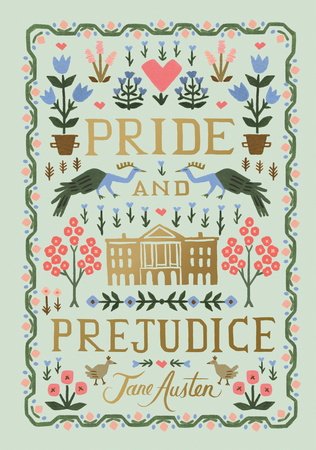
Jane Austen’s 250th birthday last year inspired this 2026 read of Pride and Prejudice. Austen is a masterful writer, and deftly covers topics of family dynamics, classicism, social expectations, and ROMANCE. That’s right, ROMANCE.
Austen is super clear about her storyline and where she is going at every turn. What I enjoy so much about this book is how feelings develop in the spaces between words, and how this feels like a journey of emotional maturation, coming of age, and emotional honesty between Elizabeth and Mr. Darcy. I was also surprised by how Austen portrays the mother in this story, as it goes against my expectations of what a person would write during Austen’s lifetime. I also understand the mother felt societal pressures to marry her daughters into financial stability and these motivated some of her actions, but still, another message Austen’s story sends (at least to me) is the thought that just because someone is your mom, that does not mean you will admire, be emotional close to, or be like them in nature.
Pride and Prejudice also challenges social norms. Society may prescribe or expect something but that doesn’t mean it is either truly right or right for you. This idea is oddly couched in a book that largely ends up adhering to societal expectations (maybe that is because I’m reading it over 200 years later) but the underlying message still permeates. If you want to walk 3 miles and dirty up your skirts to see your sick sister, go for it! I support Elizabeth’s pedestrianism!
I wish I had read this book sooner, as Pride and Prejudice still carries so much weight and presence in our culture. Movies, retellings and repackaging of its themes. Austen is everywhere!
Kill Your Darlings, by Peter Swanson
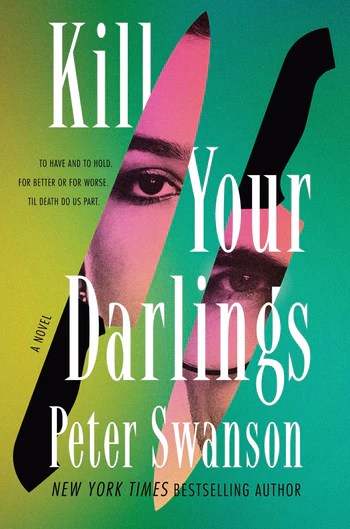
When it comes to genre fiction, sign me up for the mystery section. I listened to an NPR Book of the Day podcast that described Peter Swanson’s newest book and set the TBR aside to checked it out.
Kill Your Darlings is a mystery that plays with form via a reverse timeline that is bookended by the Exorcist Steps in Georgetown, D.C. I just re-read the first chapter and there is a fairly good reveal in it, so I think the way to read this book is to read it thru once, then go back and re-read the first chapter to catch the Easter eggs. The timeline form was interesting, but this story lacks overt accountability and I think that’s part of what helps a mystery work for me. We are left with a sliver to suggest that may change, but as readers we will never truly know, and I think it may have worked better to have a more overt implication that some type of accountability was in the cards.
In addition, Swanson makes many fairly accessible movie and literature references throughout this story, but there reached a point where they felt gratuitous and tired, not adding to the story’s momentum. In essence, this is a page-turner that plays with form, includes some D.C. flavor, yet for me it ended with a fizzle despite the haunting Exorcist Steps. A missed opportunity and that’s what I get for diverting from the TBR!
The Rose Field (The Book of Dust #3), by Philip Pullman
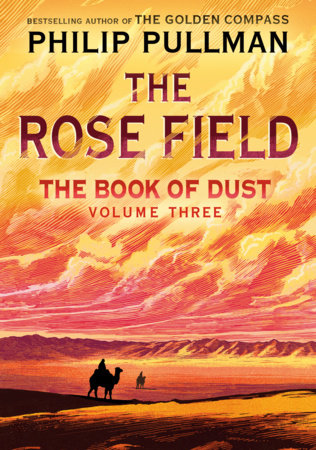
Back to the TBR for me and the last of The Book of Dust series! This last volume came in at 672 pages, but I was up for it because I felt I had to see the series through and find out what happened to Lyra Belacqua. And the book cover was so pretty. And a checkmark for the TBR! Well, forget about pretty book covers and checkmarks, what a disappointment!
There was way too much telling and not enough showing combined with a mess of a storyline that hints at bad things but sprawls all over the place. Snippets of a decent storyline and interesting concepts that were generally overtaken by plodding action and exposition. Also, the whole thing with Malcolm, his age compared to Lyra’s, and the labored way the relationship with Lyra needs to be sorted was NOT GOOD and bothered me! At times it was giving creepy teacher vibes.
The Golden Compass and the His Dark Materials trilogy was so engaging – at least in memory – but in retrospect I could and should have stopped at the end of the first trilogy because The Book of Dust was too much hard work to feel like free reading.
Dead Dead Girls, by Nekesa Afia
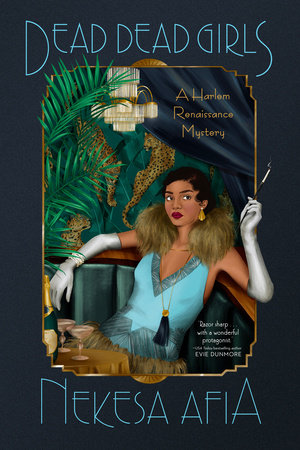
After being let down by my TBR, I set it aside again for a mystery set during the Harlem Renaissance narrated by Shayna Small, who is also one of the narrators for Nana Kwame Adjei-Brenya’s Chain-Gang All-Stars audiobook.
I enjoyed the characters and the descriptions of place in this story. Overall, Afia’s story held my interest but became convoluted and unbelievable toward the later pages, with an ending that didn’t work for me. Still, good characters and decent story, and I would pick up another book by Nekesa Afia, especially if narrated by Shayna Small!

 Chasing Mailboxes