
Recently Elly Blue put a question out to the Twitterverse, asking people about the things they found difficult when first taking up cycling. Her question took me back to 2003 or so when I began cycling around Washington, D.C., for transportation and fitness.
As I wrote about when describing my evolution as a transportation and recreational cyclist, I had a desire to explore the city on two wheels and get my blood pumping in the process, but I possessed little knowledge of the bicycle itself.
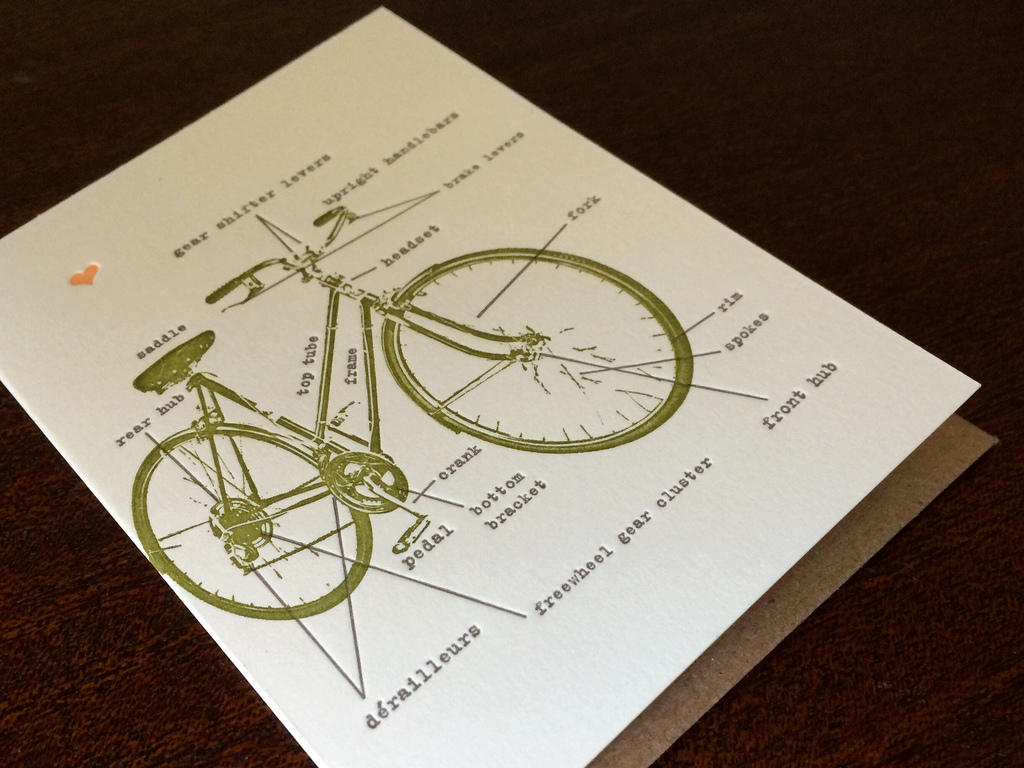
This inability to speak bike created a sense of frustration and vulnerability. Until I began riding as an adult (using a Ross mountain bike from my high school days), I had no need to know any of the proper words for bicycle parts.
Few of my friends shared my blossoming interest so my initial bicycle outings were solo affairs. I continued to put more miles on my bike, and over time it dawned on me that my bike required regular TLC to keep it rolling smoothly. Naturally, I learned this through problems that manifested– flat tires, worn brakes, rusting chains, tires balding, and the like.
I couldn’t do this type of maintenance myself so I had no choice but to search for a bike shop. The whole idea of a bike shop was daunting.
I knew little about bikes. I did not know how to talk about them. I imagined all the people working in the shop would be male and that they would all look down their noses at me, a struggling novice who couldn’t speak bike.
When presented with the choice of letting my bike fall into unusable disrepair or a visit to the bike shop, though, I mustered up my courage and went. As I feared, it was all men working in the bike shop, but they didn’t seem too horribly condescending or unapproachable so I started talking.
I hearkened back to my days living in Colombia, when I lived in a second language. I called all the parts and processes I did not understand by “thing,” and made full use of my pointing skills. “My chain and this thing…” “Using this thing while I change gears…” “This thing here doesn’t seem to be working correctly.”
Language is not learned in a vaccuum, although you can try. You can sit at home studying grammar and vocabulary, and it will certainly help you some. It’s through having occasion to use the words that they begin to lodge themselves into our heads.
Even though I speak bike more than I ever did, I still don’t speak it very well. Yeah, I learned the basics alright because my bike is generally my preferred transportation method, and it’s necessary for me to have a roadworthy steed at all times.
The finer points of bike speak are reluctant to stick, like a person whose name you know you should know, but you have a delayed ability to recall it. Seat stay, chain stay, skewer, cantilever vs. caliper. Bah.
My lack of good bike speak doesn’t hold me back from bike shops and caring for my bike these days. I now have the experience that comes with 11 years of daily riding. I also have a circle of friends, established relationships with bike shops, and a randonneur and real-life spouse who are fluent in the language of bike. If there is bike vocabulary I need to learn or a particular aspect I’m struggling with regarding my bike, I’m comfortable asking.
It wasn’t that way in the beginning. I look back on that woman just starting out as a cyclist and I feel so much empathy for her. She did not have a support network to teach her the language of bike. I’m proud of her for reaching out and overcoming her fears. The bike rider I am today thanks her.
*The card featured in this post is from Larkpress. They make beautiful paper goods (perfect for Valentine’s day, hint hint) so check them out here.


 Chasing Mailboxes