

In recent years I’ve been attacking reading like a starving person. There is so much reading to experience and I’m hungry to get to it all, yet constantly behind in meeting my reading dreams.
Who are these people doing re-reads of their favorite books?! How do they do it? I make it through a book once and rarely look back, as there’s always another book on deck I must dive into. #goals
With the 2025 midpoint behind us and just under 70 books read or audiobooked to date, I wanted to highlight some of my fave reads.
Here we go with three nonfiction and three books of fiction for your consideration. Basically, a book for each month so far.
First up, my nonfiction selections for you.
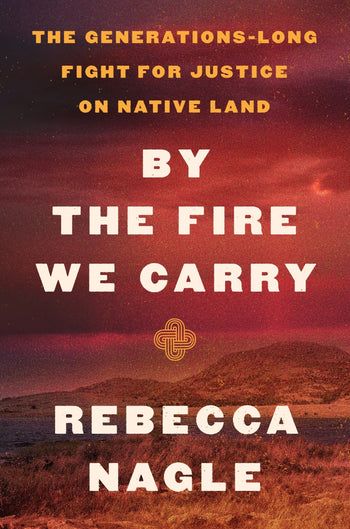
By The Fire We Carry, by Rebecca Nagle
This is an extensively researched history of the Cherokee Nation told through two recent Supreme Court cases about reservation land and jurisdictions. Nagle’s personal history brings a unique perspective as well that adds another layer to the read. I had not understood allotments at all well, nor was I knowledgeable about the Cherokee and their tribes’ history and the destruction of their land and culture via the levers policymakers and others pulled over time under the guise of progress or some other lie.
By the Fire We Carry drives home the history of a country that has never lived up to espoused ideals. It’s disappointing and devastating and continues to play out. The book is dense but no words are wasted.
For those interested, Traci Thomas interviewed Rebecca Nagle for her podcast The Stacks and I highly recommend their conversation for more about this important book.
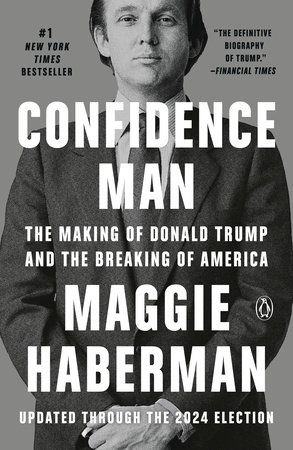
Confidence Man, by Maggie Haberman
I picked Confidence Man up with a desire to understand more about our current time in history, gain better knowledge of Trump’s personal story, and maybe understand why so many are drawn to him. There are instances when Haberman’s book feels in conversation with Nagle’s By the Fire We Carry.
Compulsively listenable, Haberman’s narration, research, and reporting are so good. And given the length and material, the only way I would have made it through this title was by listening to it while stomping around on long walks.
So much happened during Trump’s first term. I had forgotten some of it, and many ideas he held during his first go as president are resurfacing today. Haberman recounts it all. She explains the players around Trump quite well, too, and many of these same people remain in his orbit today.
At times this book felt like it was a full documenting of the record for future generations. Confidence Man is laid out from Trump’s upbringing in New York to his own time in the White House and just after Biden became President.
“He(Trump) works things out in front of us. Along the way, he reoriented an entire country to react to his moods and emotions.” Will Haberman write a Confidence Man Part 2? If it’s shorter than this book I will be sure to read it.
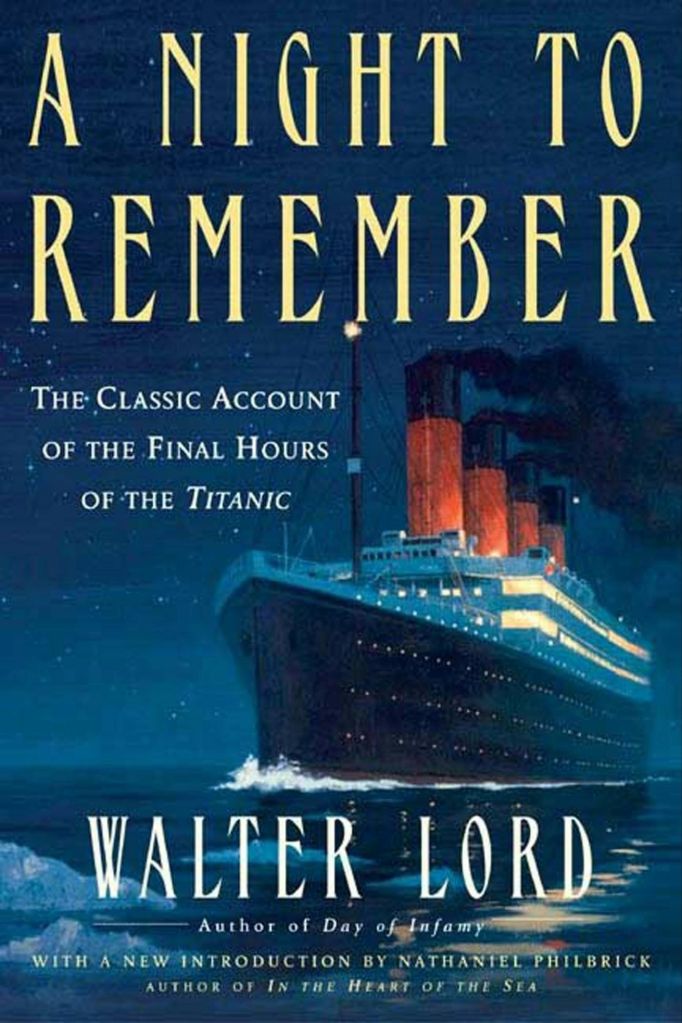
A Night To Remember, by Walter Lorde
A tightly constructed telling of the night the Titanic sank, using survivors’ testimony, news reports, and other documentation to show both the human experience and the systems failures that occurred.
This book covers the hours leading up to and just after the Titanic hit the iceberg and ultimately sank on April 15, 1912. That is the mission of this book and I appreciated Lorde’s sharp focus.
I didn’t realize all the changes that resulted from the Titanic disaster: 24-hour electronic communication requirements, increase in lifeboats on ship, and even where ships can navigate in order to avoid ice. I also didn’t know that the Titanic was the first time that SOS had been used as a distress signal vs the previous code.
A Night To Remember explores how classism contributed to the prioritization of evacuees during the event, as well as the classist way the event was covered in its aftermath. For example, news sources and others that wrote about the Titanic shared the perspective that everything that could have been done during the evacuation was done. Hahahaha no! It was a complete mess and more lives could have and should have been saved with proper planning and safety measures with all passengers in mind.
Given the scope of the disaster as well as the amount of reporting and testimony Lorde uses as source material, the book’s themes could have easily been garbled, but he clearly sifts these themes out for us. Lorde’s book reads like a thriller.
I picked A Night to Remember up after listening to a podcast interview with Adam Higgenbotham, author of Challenger and Midnight in Chernobyl. Higgenbotham said if you haven’t read Walter Lorde’s book, stop what you’re doing and go read it.
That’s what I did and now I understand why people became obsessed with the Titanic. The real Titanic is no Titanic the movie, with Rose and Leonardo hanging out chatting while resting on a piece of wood and half-submerged in freezing water. Now that I’ve read Lorde’s book, I can tell you those two would not have made it because it was simply too cold. A Night to Remember still reads well today so if you haven’t checked it out, do it!
And now, onto the fiction reads!
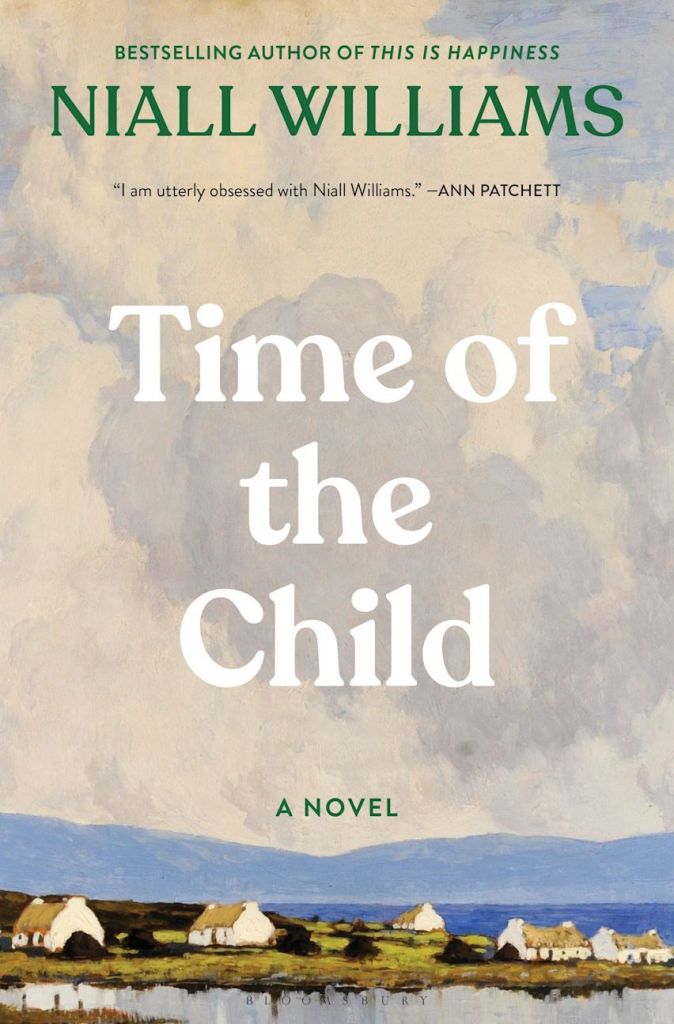
Time of the Child, by Niall Williams
A story of love, empathy, and acceptance in the invented Faha with a touch of the fantastical and a gentle sense of humor. I learned the word perspicacious! Williams skirts the boundaries of being precious at times, but the book contains enough dry humor to avoid it.
Williams really loves his characters and his Faha, and it shows in his descriptions of the town’s details as well as the details of its residents.
Time of the Child reads like a modern fairy tale, though I confess it is a slow build due to all the details Williams paints for us.
When people describe feeling safe in the hands of an author, this book and writer exemplify what they are talking about.
Time of the Child was a perfectly timed escape from the troubles of life, and the audio narration is brilliant.
“The purpose of aging is to grow into your soul.” Yes.

We Do Not Part, by Han Kang. Translated by e. yaewon and Paige Aniyah Morris.
“That was when I realized. That love was a terrible agony.”
Visceral, vibrant, surreal. A book that bears witness to tragedy and obligates us to keep looking and see how we bear history’s weight.
In this case, it is the women who are history’s witnesses, and the book centers on the lingering trauma of the Jeju massacre during the Korean War. Visceral is the word I keep coming back to, as this book went through me like a dagger.
I loved this book, at times it was so intense I actually felt nauseous. It’s so well told and another book where I leave it convinced that everyone should read this.
A reviewer on an episode of the Bookshelf podcast said, while speaking about this book, that Han Kang is bearing witness to South Korea’s history through her writing while putting herself at psychological risk. I don’t know if that is the case, but the path she treads with this story makes one wonder.
I could not deal with Kang’s previous book, The Vegetarian, primarily because my own past with actual food issues didn’t allow me to enter the story as I think it was intended, but We Do Not Part is incredible. Despite my tendency to not read books more then once, I hope to re-read this later this year as I want to spend more time with its themes. (You see? I may become a re-reader after all!)
And one last thing, the book cover! The stunning cover to this story draws the reader right into it.
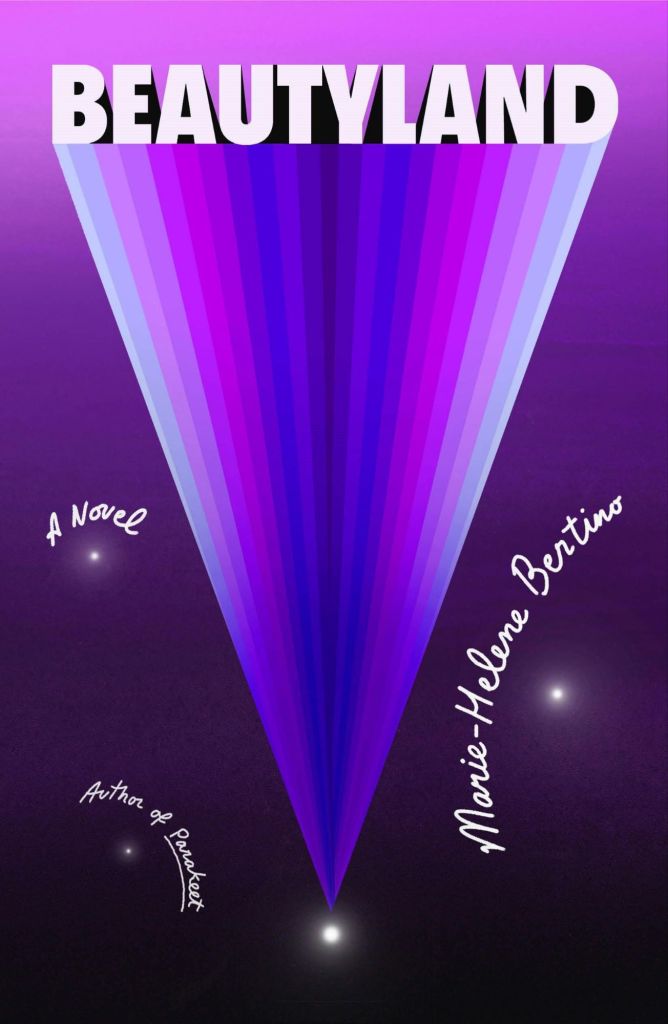
Beautyland, by Marie-Helene Bertino
I needed a sci-fi read for the 2025 Politics & Prose Reading Challenge I’m trying to complete. My stepdaughter suggested Beautyland, as I’m more of a sci-fi lite person. This book delivered and uplifted my spirit along the way.
Beautyland is sweet, serious, funny, and creative. An alien in Philadelphia communicates to her home planet via fax machine and shares observations of what it is to be human, wonders about the parts that perplex, and tries to understand life’s cruelties. I actually teared up reading about Carl Sagan, something I never imagined myself doing ever. That part of the book was both funny and tender. “Please stop talking to us about Carl Sagan!” Adina’s home planet reps tell her. Hahaha!
Themes of our existence – solitude, loneliness, love, growing up, sexism, race, class, grief, cruelty – are all explored from a quasi-observer perspective. From all of this emerges an overarching exploration of what it is to belong and what it means to be human.
Adina begins as what she believes is an outsider, but is her being alien what makes her that? Tender, sad, yet hopeful (with Adina’s mom sitting in the front row to the very end), Beautyland is the book I needed to for 2025.
So tell me about your 2025 reading. What recs do you have? I always like building my To Be Read (TBR) list off of recommendations so please send some my way!
P.S. Apologies for any typos, as I put this together using my phone.


 Chasing MailBoxes
Comments welcome. Keep it civil, por favor!