
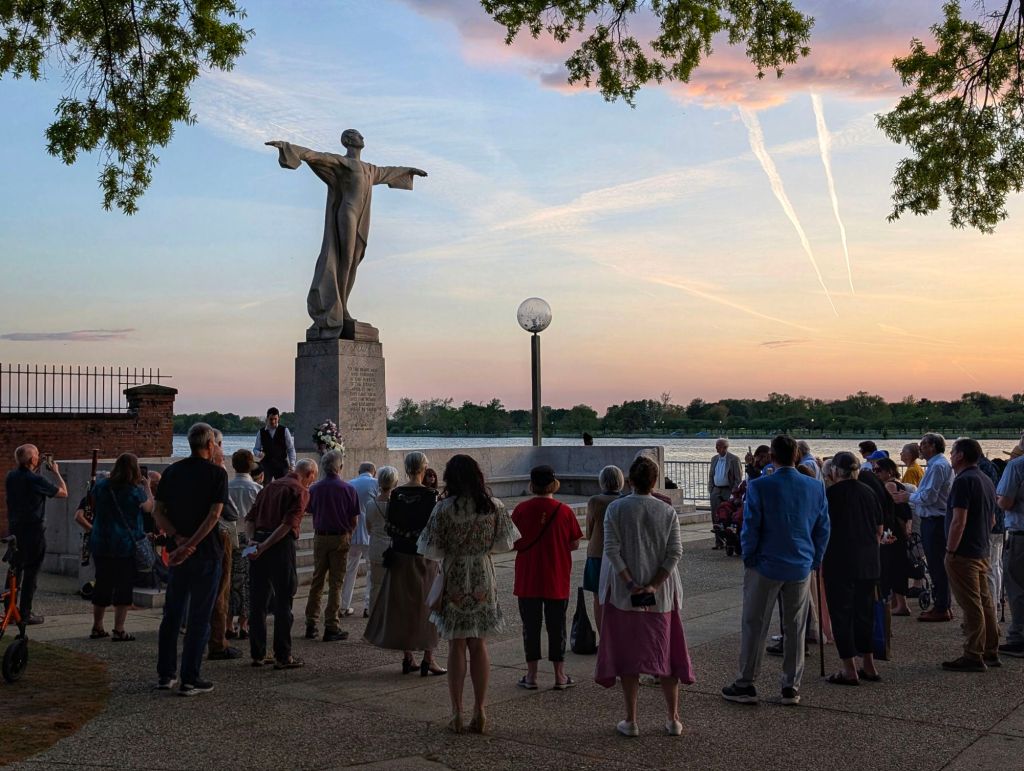
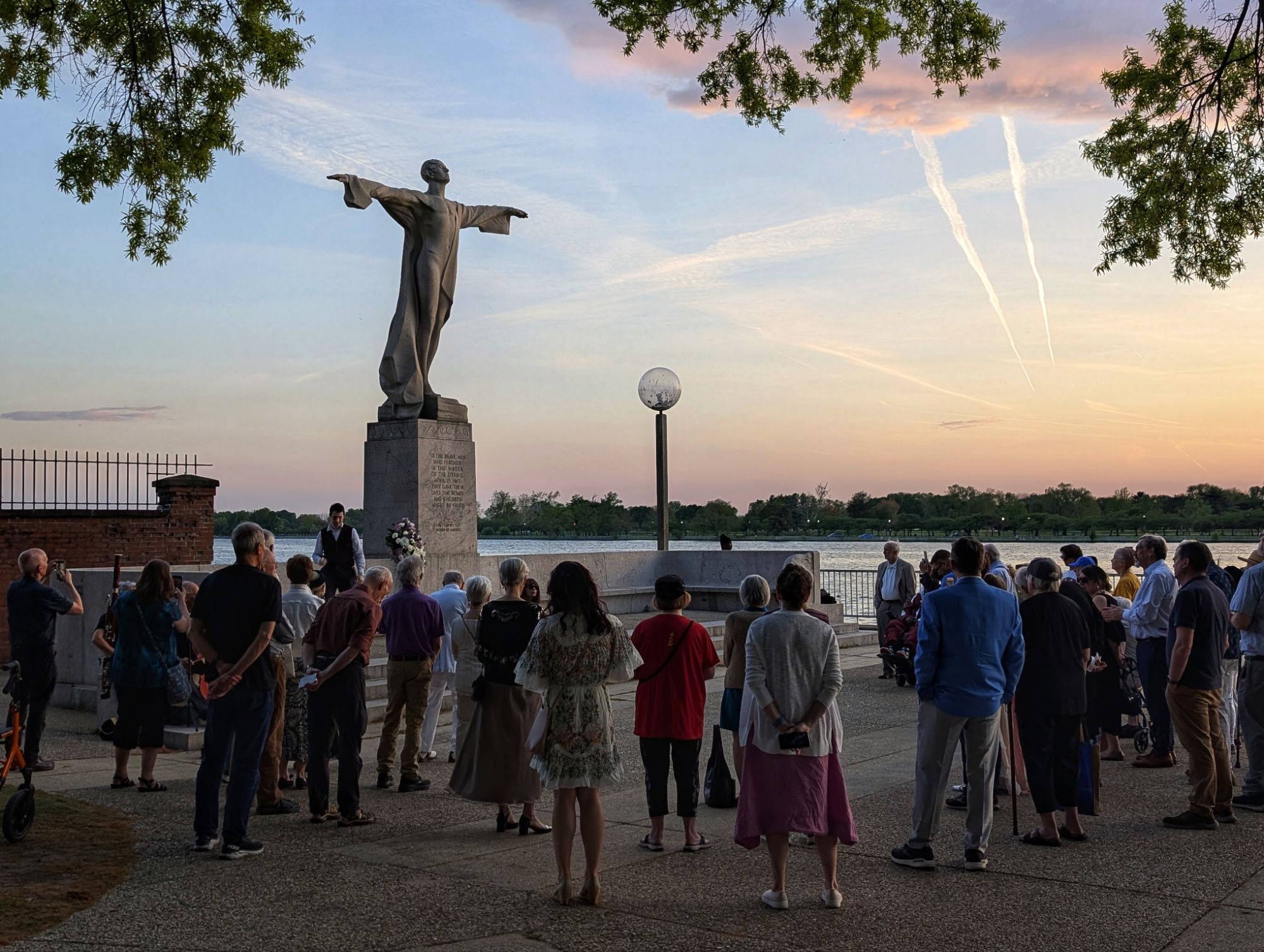
Yesterday I returned from a weekday run and came upon a group holding a wreath-laying ceremony in remembrance of those who died in the Titanic disaster in the early hours of April 15, 1912.
At 11:40 p.m. on April 14 the great ship hit an iceberg and at 2:20 a.m. April 15, 1912, the vessel sank.
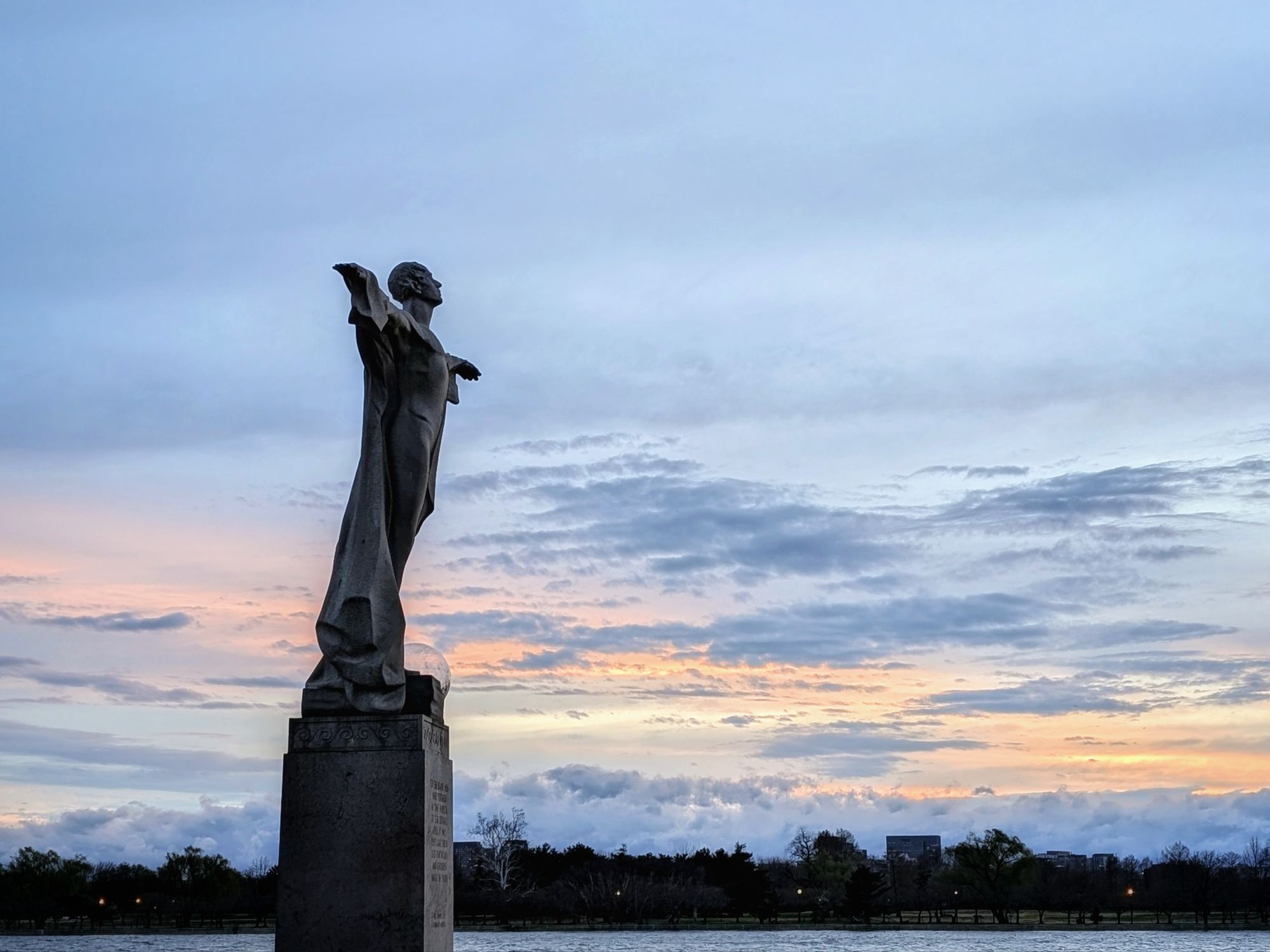
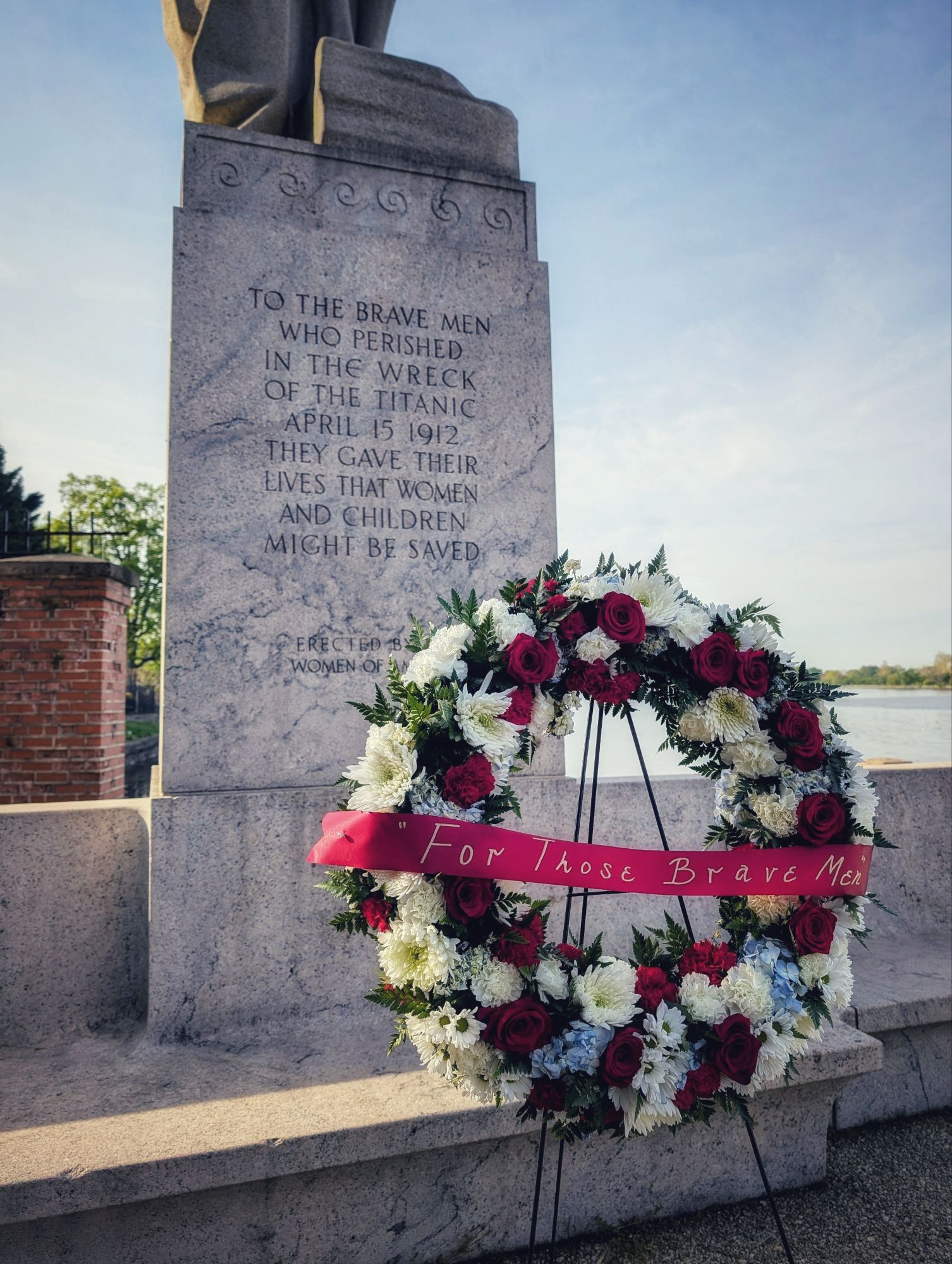
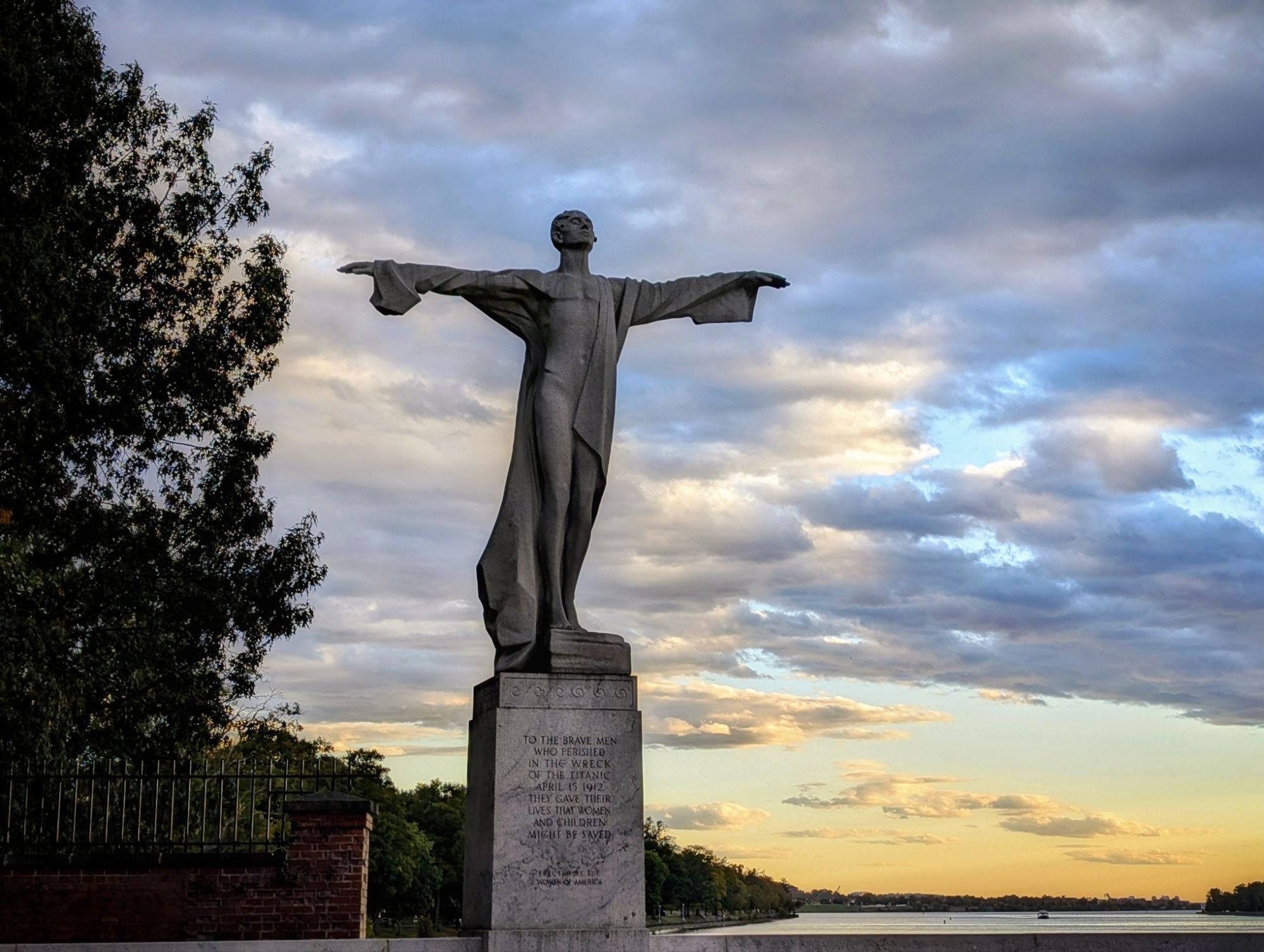
The unassuming memorial dedicated to the men of the Titanic abuts the Washington Channel in Southwest D.C. and is located in a small park south of what is now The Wharf. The statue is a of a man with arms outstretched and lettering on the bottom of the memorial reads:
To the brave men who perished in the wreck of the Titanic on April 15, 1912. They gave their lives that women and children might be saved.
This message is true, though incomplete, as I learned from reading Walter Lord’s A Night to Remember last year. The story of who lived and died that night and why is much more complicated.
I had never given this disaster its due, never understood its scope, as it had been clouded by the movie version of the Titanic. Walter Lord’s book showed me the importance of the Titanic in our collective memory, both on a human level as well as in terms of the systemic improvements resulting from it.
In the aftermath of the Titanic, people learned about the failures that contributed to the disaster, and underlying most of these was hubris that the vessel simply wouldn’t sink. The ship had insufficient life boats. No one practiced emergency evacuations. During the emergency, passengers had been encouraged to stay off the deck. The ship had traveled into polar territory, making it more likely to encounter ice floes.
At the time, ships did not require 24-hour radiowatch communications, something hard to fathom today. The Californian, a neighboring ship 10 miles away that could actually see the Titanic, thought it was letting off fireworks when it was actually popping flares and so did nothing to see if it was in need of help.
The Titanic began sending distress signals just after midnight, but it was not until 1:45 a.m. that the Carpathia – 67 miles away from the Titanic – began to respond. The Carpathia would not begin rescuing passengers from lifeboats until 4:10 a.m., collecting the last surviving passenger at 9:00 a.m. April 18, three full days later, the Carpathia would arrive in New York.
In total, the Carpathia rescued 705 people, and around 1,500 died (there are conflicting numbers on this, it appears). The story of those who died on the Titanic tells a more complex story of survival and death. Yes, the Titanic’s passengers agreed that women and children would be prioritized for evacuation, but the wealthy passengers on the upper decks were more likely to have a space on a lifeboat than others. In addition, the lack of safety protocols and gear most assuredly led to many more deaths.
Over time the collective memory of the Titanic disaster has become gauzy, made even moreso (at least to me) by the 1997 James Cameron film. Like I’ve said before, there is no way that Leonardo DiCaprio and Kate Winslet would be chatting on a wood plank as they await rescue, the freezing conditions would not have allowed it. People were dying of hypothermia.
I try to place myself back in that time, and imagine that only just now would people along the East Coast possibly be hearing murmurings of the horror that was occurring – had occurred – on the Titanic. It’s difficult to fathom the scope of this tragedy.
Walter Lorde writes in his book that news stories at the time tried to make the case that everything that could be done was to save the Titanic passengers, but that simply wasn’t true. More lives could have and should have been saved with proper planning and safety measures with all passengers in mind.
I was heartened seeing that people still take time to remember the Titanic and the lives lost, and honor its place in our history and memory. If you are ever in D.C., this humble memorial nestled in a quiet park by the Washington Channel is worth a stop. And if you are interested in learning more about what happened the night the Titanic sank as well as the people on board, Walter Lord’s A Night to Remember is a riveting synopsis.


Comments welcome. Keep it civil, por favor!